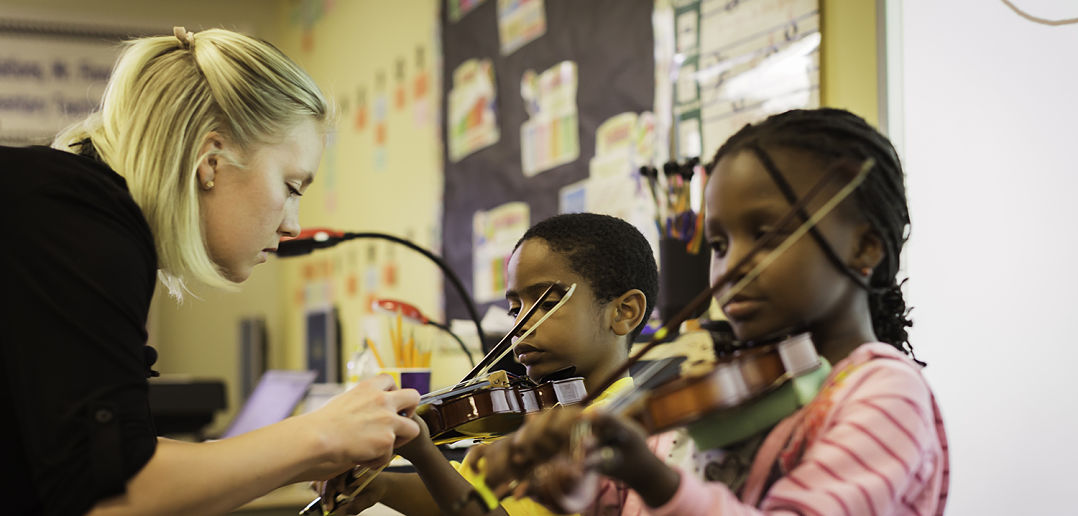
How does music improve educational purposes? In our society, music serves many desires. Music has been around for about 55,000 years and has more than one hundred different genres. However, in the classroom, music does justice for our children. Music delivers abounding purposes! The first purpose is music helps evolve language and reasoning. Those who listen to music at the early ages of their life, allows the brain to relate to language and reasoning, considering that the left side of the brain develops music, which allows songs to leave a mark of information on young minds.
The second element is memorization. Students who are musicians, persistently use their memory, while they perform in front of an audience, or just in general; even those who may still use the music sheets! A student who masters memorization helps a student tremendously in education. For example, in high school Anatomy, memorization was how I successfully passed the class with a high C. The class covered 50% labeling different parts of the body. Although that part of Anatomy was simple to me, I still had to use memorization! A source that I used to help me recall certain components, was flash cards.
The third way is music benefits educational purposes is because students learn to improve their work. When a child is studying music, this provides the student to pick up on craftsmanship, which makes the student eager to construct excellent work, instead of doing the bare minimum. This type of ambition can be enforced in all branches of study. The fourth component is kids will stay engaged in school. Today, kids find music to be enjoyable, which would keep the student’s interest, active, and commitment. Studies have shown that children who are musicians are more likely to stay in school and reach their goals. These are the four components that music helps a child succeed in education.

 MediaAndMusic